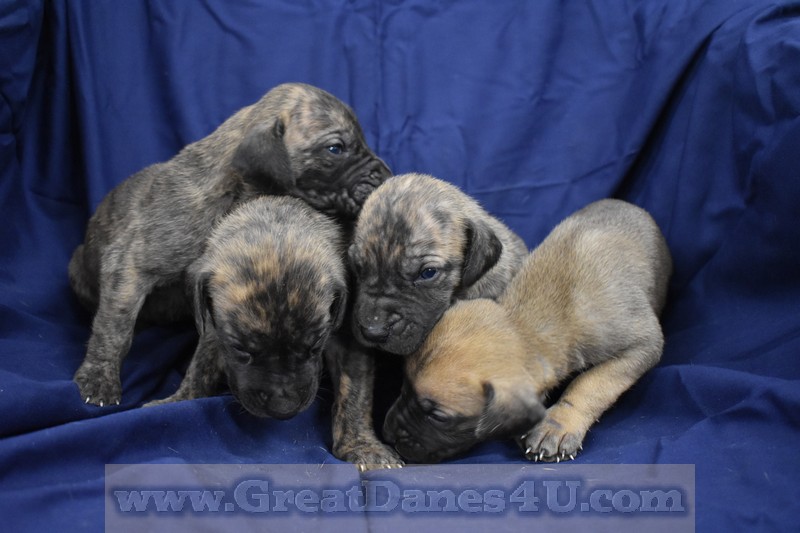
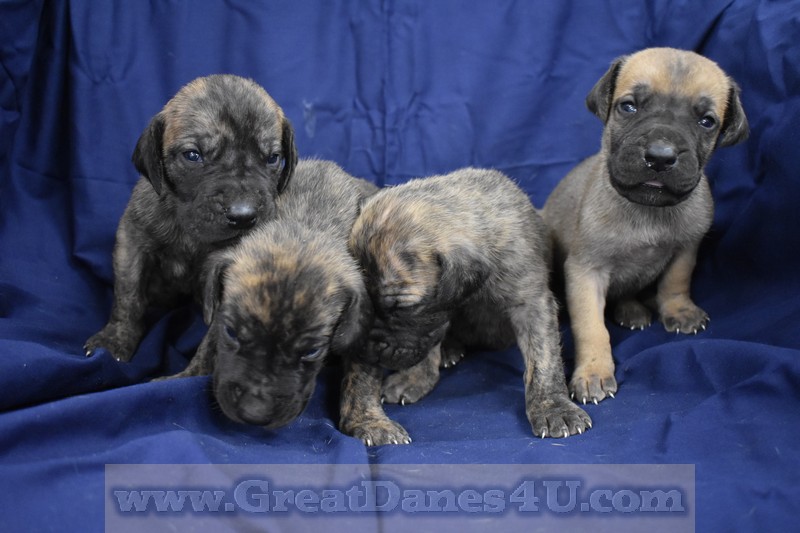
Great Dane stock is 4 to 5-Generation
Color-Pure and are Micro chipped plus all are DNA Profiled. Most of our
stock are OFA Certified, (Orthopedic Foundation for Animals), if age
appropriate.
Pups go micro-chipped, 2 applications of Kennel Cough, 2 Parvo shots, (or more), dewclaw removal and at least 1 Vet check, plus a
variety of wormers as the puppies bodies can handle the various types and most go home close to Housebroke!
Enclosed within this web site is Free Information about Great Danes Appearance, Standards, K-9 Care, this Breeder's Policies, Dane History and many Pictures of Great Danes. Please send your comments, suggestions, or to be registered in the litter email flier database; send you email request to: Sales@GreatDanes4U.com or just pick up the phone, call: 417-859-0844 to schedule a *LIVE* Web Cam appointment or for any further information!
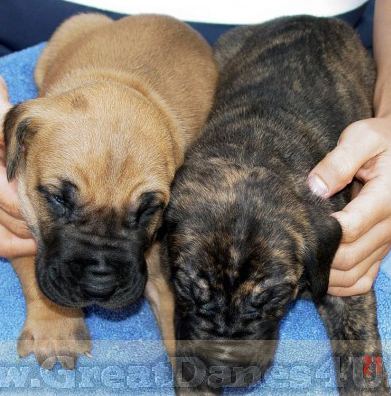
GreatDanes4U uses this site to promote Healthy, Trained, Socialized Multi-Generation Color-Pure FAWN and BRINDLE AKC Great Dane Puppies, Big Pups and Dogs for sale as Family Pets, Breeding Quality and Show Potential pups and
Stud Service. Occasionally Black and Blue Great Dane puppies are also available.
Use Blue Menu Bar (Below), or Text link Site Map in footer to Navigate this extensive website.
This is the Heat Cycle Page:
Copied from an article found at:
http://www.essortment.com/all/dogestrus_rkpj.htm
During my many years working in veterinary medicine, I couldn’t begin to count
the number of times I handled upset owners whose dogs were “bleeding.” Others
would tell me they thought their dog was “menstruating.” In a way, they weren’t
that far off. What they were describing was the Estrus or heat cycle of their
female dog.
Once I explained that all unsprayed female dogs go through this at least once,
usually twice a year, they then wanted to know how long they were going to have
to put up with the mess and the neighborhood Romeos.
The average estrus cycle in a dog is approximately twenty-one days and this
cycle usually occurs every six to seven months. The first cycle will often
depend on the size of the dog. Small breeds such, as Chihuahuas or Toy Poodles
will come into heat between five and seven months. Large breeds like the Collie,
Mastiff or Great Dane may have their first heat cycle at six months but it isn’t
unusual for them to delay until they are a twelve to sixteen months. Larger dogs
develop at a much slower rate than small dogs.
There are three distinct stages of the heat cycle. The first one is the
“Proestrus” and it is during this stage the owner will often notice the bleeding
from the vulva. The bleeding itself can be slight or she can leave evidence of
her condition everywhere she sits or lays. For those owners who keep their dogs
in the house, many pet stores carry dog panties that hold special canine
sanitary napkins to eliminate the mess. In addition to bleeding, the vulva will
also swell and the dog will usually have an increase in urination. The most
obvious sign to most owners are the increase in population of male dogs around
their house. This proestrus part of the cycle will last between seven and ten
days and the female will make it clear she wants no part of the male during this
time. Unfortunately for the owner, the male dogs don’t know how to take no for
an answer. They will climb or dig under fences, attempt to breed through the
fence if the female strays close enough and often serenade the dog and owner
into the wee hours of the night.
The second stage or actual “Estrus” stage of the heat cycle will often begin
between the eight and tenth day after the first sign of color (bleeding). During
this time the color of the blood has gone from bright red to pink and then to an
almost clear discharge. It is during this stage most females will allow a dog,
in fact ANY dog to breed her. The estrus stage can last between four and seven
days and it must be remembered the female can become pregnant with mixed
litters. Just because you bred your purebred collie to another collie doesn’t
mean she can’t have puppies with the Doberman next door and the German Shepherd
up the street. Your best bet is to keep her confined in the house during the
entire estrus cycle or take the easy way out and board her for the necessary
time. If you keep her at home, you may want to purchase a crate to keep her in.
I had one collie that attempted to chew the front door down to get to the male
outside. When that didn’t work, she leapt through our front window as soon as I
went to pick up the kids at school. After her rendezvous with my male collie
outside, she went over the fence because she had taken a liking to the chow that
had been panting after her for over a week.
If you do decide to breed your dog, she will show her willingness to be bred by
“flagging” whenever you scratch the area directly above her tail. By flagging,
she will actually stand still and lift her tail up and out of the way. For those
breeds that have had their tails docked, you will just have to wing it although
a veterinarian can do a vaginal smear. Each stage of the cycle will have
different types of cells appear on the slide.
The third stage of the heat cycle is the “Diestrus.” This is when the female is
going out of heat. During this time she will still be giving off the heat
“scent” and males will still be congregating for her attentions. Once again she
will be out of the mood and will snap at the males or sit and lie down when they
try to mount her. The diestrus stage will last approximately seven to ten days.
Once it is over, the dog will remain out of heat for approximately six to eight
months.
During my work, I have seen many dogs have unwanted puppies, develop uterine
infections or pyometria. I have assisted in countless C-sections through the
middle of the night, often delivering dead puppies because the owner waited too
long to bring the dog in. If you do not plan on breeding your dog, get her
spayed. This can be done during the heat cycle although there is a greater risk
of complications and many vets will charge extra for the surgery. Spaying not
only removes the chances of unwanted pregnancies and complications, if done
BEFORE the first heat cycle, it greatly reduces the risk of mammary (breast)
cancer later on in life.
Copied from an article found at:
http://www.essortment.com/all/dogestrus_rkpj.htm
Affiliates And Sponsors:
|
Want to see what can happen to you & your family if have
Firestone A/T tires on your vehicle?
L Save your family, REMOVE Firestone tires NOW!!! L |
|||||||||||
![]() ![]() |
![]() ![]() |
![]() ![]() |
![]() ![]() |
||||||||
|
|
|
||||||||||
| Fair Grove Veterinary Service LLC P.O. Box 9 5348 E. State Highway CC Fair Grove, MO 65648 (417)759-7803 fgvs@fairgrovevet.com |
Link to
my Vet's web site![]() Link to an Awesome Disease & Pharmacy Library |
Fair Grove Veterinary Service provides you with a full library of pet medical information from the Veterinary Information Network. VIN is the world's first and largest online veterinary community, where new articles are added weekly by the experts at VIN to make sure that our readers have the most current veterinary information available. |
|||||||||
|
My Pet Outlet selected GreatDanes4U as their 2006 Puppy Website of the year!
|
![]() ![]() Congratulations! GreatDanes4U has been selected to earn the prestigious Top Dog Website Award for 2010 from www.TrainPetDog.com . This award is given to carefully chosen dog websites based on the information content and the overall layout. |
|
|||||||||
|
|
|||||||||||